Wednesday, August 19, 2015

Naturalistic Occultism: An introduction to scientific illuminism


For those that prefer a more scientific approach ( or even if you don't. ) The scientific method is certainly a must use approach when wading through the waters of what is hidden(occult.) especially when so much dis and misinformation is out there. Some deliberate to sidetrack the profane and much way off the mark due to lack of research or researching using improper materials.

Naturalistic Occultism: An Introduction to Scientific Illuminism is an attempt to introduce the approach of Scientific Illuminism to occultism. It is in line with the motto of Scientific Illuminism, "The Method of Science, the Aim of Religion." Naturalistic Occultism approaches the theory and practice of occultism in a way that is scientific (using the scientific method and being up-to-date in current scientific knowledge), naturalistic (not supernatural), and pragmatic (whatever works is provisionally 'true'). This book represents an honest attempt to separate the gold of the practice of magick from the dross of superstition and dogma.

A must have read. Highly recommended to any practitioner of the occult arts -- beginner or advanced -- and any academic student of Western esotericism.

 "Initiation in occultism always consists in... the continuous de-conditioning (i.e. overcoming mental and behavioral habits) and then reconditioning of the human nervous system in accordance with the volition of the organism; it is the self-discipline of the aspirant – through the continual cultivation of health and strength in mind and body through austerities – and the exploring of the occult ('hidden') regions of the mind. This is signified in traditions of occultism by the Serpent of Wisdom climbing the ten Sephiroth of the Tree of Life from Malkuth to Kether, the building of the Pyramid, the removal of dross to find gold, or the chiseling or forming of the rough ashlar/stone into the perfect ashlar."

Follow the link for your free .pdf download of the book and grow wise.

Naturalistic Occultism: An introduction to scientific illuminism


Sunday, August 16, 2015

on July 25th 2008 - Sounds of Mass Production - Scarlet Letter, Pt. 1

Craig Hulet speech about AIDS on July 25th 2008


I hesitate to use the word 'evil' because I don't think it exists in any absolute terms, but in human terms, when you look behind the mask of the American government, I can't think of any other word that suffices to describe what these people have been up to for the past twenty years. It may be the greatest crime in the history of the human race.
Well, now we know, now we know exactly what it's like to live in a society where information is controlled and suppressed by the government.
AIDS was developed specifically to reduce the population...
Uh, there may be some people who hate me for saying these things, who accuse me of spreading fear
AIDS was developed specifically to reduce the populations of Central Africa, the black inner-cities, drug users, prostitutes, and homosexuals, homosexuals, homosexuals.
Once AIDS is developed as an instrument of depopulation I can't think of any idea that is more chilling, more completely horrifying, but that's exactly what I'm saying because that's exactly what it is.


Monday, August 10, 2015

World's Secret Shadow Government: Conspiracy Theory or Frighteningly Real?


Is the famous conspiracy about a secret government that runs the world completely nonsense or does the idea actually have any supporting evidence?


Conspiracy theories — hypotheses claiming that historical events could have occurred due to the nefarious actions by hidden parties — still remain largely neglected by researchers and considered as implausible and irrelevant.

On the other hand, conspiracy theories usually attract a lot of attention from a wide array of people, prompting heated debate on issues ranging from the world's shadow government to the chances of an alien invasion taking place. While most researchers do not take these theories seriously, some scholars insist that they do deserve attention.

The "cryptocracy," or shadow government, concept is one of the most popular. According to this belief, real and actual political power does not reside with democratically elected public representatives, but with an elite set of individuals who exercise power behind the scenes. This secret government is not responsible to democratic institutions. Furthermore, according to conspirologists, official governments are subservient to it.


The Bilderberg Group

The shadow government theory supporters point their finger at the Bilderberg Group (Bilderberg Club), a private organization founded in 1954. The Group annually brings together up to 150 political leaders and experts from academia, finance, media and industry in order to discuss the most burning political and economic issues.

"The conference is a forum for informal discussions about mega trends and major issues facing the world. The meetings are held under the Chatham House Rule, which states that participants are free to use the information received, but neither the identity nor the affiliation of the speaker(s) nor of any other participant may be revealed. There is no detailed agenda, no resolutions are proposed, no votes are taken, and no policy statements are issued," the Bilderberg Meetings official website states.


Madrid-based author and investigative journalist Daniel Estulin is a longtime watcher of the secret group. In one of his books, entitled "The True Story of the Bilderberg Group" (La Verdadera Historia del Club Bilderberg), the author provided a report of the organizations' purported mission.

According to the investigative journalist, the Group is considering the creation of "a One World Government (World Company) with a single, global marketplace, policed by one world army, and financially regulated by one 'World (Central) Bank' using one global currency."

Estulin believes that among the Group's major objectives are: centralized control of all foreign and domestic policies; a New World Order with no middle class (just "rulers and servants"); one international identity and one set of "universal" values; "mind control" of the world's population; imposing a universal legal system; making NATO the world's military; manufactured crises and perpetual wars etc.

The author points out that the Bilderberg Club is not acting alone. It has influential secret partners — two groups of "global power brokers": the US-based Council on Foreign Relations (CFR) and The Trilateral Commission, founded in 1973 by David Rockefeller, who is at the same time a leading Bilderberger and CFR Chairman Emeritus.

The triple alliance is advocating a global super state with the US and other nations ceding their sovereignty to a global central power.

"Imagine a private club where presidents, prime ministers, international bankers and generals rub shoulders, where gracious royal chaperons ensure everyone gets along, and where the people running the wars, markets, and Europe (and America) say what they never dare say in public," Estulin underscored.

However, according to other researchers, the Club is unfairly demonized. Regardless of their purported goals, neither the Bilderberg Group nor CFR with the Trilateral Commission have got enough political and economic resources to rule the world, experts say, insisting that evidently "the devil" is not so black as he is painted by conspirologists.


Le Cercle

At the same time, there are analysts who believe that Bilderberg is just the tip of the iceberg and refer to another influential secret group — Le Cercle — also established during the Cold War era.
Le Cercle is not as well-known as the widely discussed Bilderberg Group. It was founded in the early 1950s as an elite clandestine forum targeted against the USSR.

According to investigative journalist David Teacher, the little known but powerful Le Cercle (or Pinay Cercle) has been focused on domestic subversion and has used its network of propagandists and intelligence agents to carry out smear campaigns against progressive European and US politicians in order to promote their favored candidates. Teacher pointed out that the group played a crucial role in the fall of the Iron Curtain and then orchestrated the integration of Eastern Europe into the European Union.


"Amongst Cercle intelligence contacts are former operatives from the American CIA, DIA and INR, Britain's MI5, MI6 and IRD, France's SDECE, Germany's BND, BfV and MAD, Holland's BVD, Belgium's Surete de l'Etat, SDRA and PIO, apartheid South Africa's BOSS, and the Swiss and Saudi intelligence services. Politically, the Cercle complex has interlocked with the whole panoply of international right-wing groups: the Paneuropean Union, the European Movement, CEDl, the Bilderberg Group, WACL, Opus Dei, the Moonies, Western Goals and the Heritage Foundation. Amongst the prominent figures associated with the Cercle Pinay were Antoine Pinay, Konrad Adenauer, Archduke Otto von Habsburg, Franz Josef Strauss, Giulio Andreotti, Paul Vanden Boeynants, John Vorster, General Antonio de Spinola, Manuel Fraga Iribarne, Margaret Thatcher and Ronald Reagan," Teacher wrote in his book "Rogue Agents: Habsburg, Pinay and the Private Cold War 1951-1991."

However, analysts should neither exaggerate nor demonize the impact of parapolitical secret entities on history, according to Andrei Fursov, a Russian historian and researcher at the Institute of Scientific Information on Social Sciences of the Russian Academy of Sciences (RAS).

The historian insists that there is no such thing as a "shadow government" that rules the world. He warns researchers against making wild claims about the true nature of transnational clandestine groups, stressing that they are "very routine" structures of global financial and political elites. The primary role of these entities is to serve as a platform for coordination and cooperation of the world's "power-brokers" interrelated competing groups.

The roots of these clandestine forums lie deep in European history and are closely connected with the development of capitalism, according to Fursov. Remarkably, in the 17-18th century European financial moguls used Masonic transnational networks in order to expand their trade connections, evading at the same time government control, the historian noted. In the book "De Conspiratione" ("About Conspiracy") Fursov analyzed the genesis of European capitalism and provided evidence showing that transnational clandestine organizations are an integral part of the capitalist system.


However, the "secret history" of clandestine organizations remains largely neglected although a lot of information about their activities has recently surfaced.

Referring to this fact, Andrei Fursov cited the Father Brown Stories written by English novelist G. K. Chesterton:

"After the first silence the small man said to the other: "Where does a wise man hide a pebble?" And the tall man answered in a low voice: "on the beach." The small man nodded, and after a short silence said: "Where does a wise man hide a leaf?" And the other answered: "In the forest."


Article courtesy of Sputnik News


Tuesday, July 21, 2015

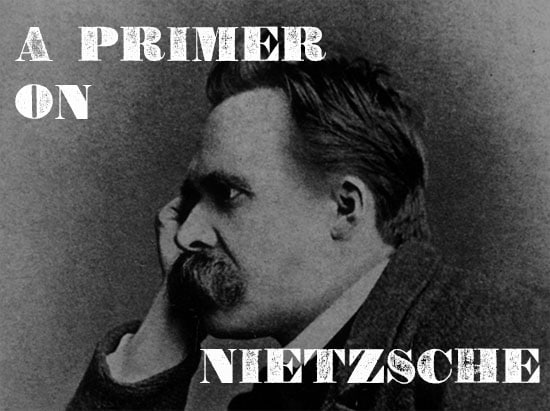
Say Yes to Life: An Accessible Primer on Nietzsche’s Big Ideas

nietzsche

Friedrich Nietzsche introduced several ideas into Western philosophy that have had a huge influence on the culture of the 20th and 21st centuries. Existentialism, postmodernism, and poststructuralism have all been touched by Nietzsche’s work.
His impact isn’t just seen in academic philosophies, though, but also in the way many modern Westerners approach their lives. The love of struggle, the quest for autonomy and personal greatness, the clarion call of following your passion and making your life a work of art — these are all cultural currents Nietzsche helped shape and set in motion. Thus to really understand modern life in all its wonder, and weirdness, one must understand Nietzsche.
Below I highlight just a few of Nietzsche’s biggest and most intriguing ideas; even if you decide you vehemently disagree with them, they are excellent fodder for examining how you live and exist in the world. Do you, as Nietzsche exhorts, “say yes to life”? Or do you deny its powers and possibilities and simply loaf through your existence?
Keep in mind that this article isn’t an exhaustive look at Nietzsche’s work; it’s designed to be an accessible primer for those who wish to dip their toes into his philosophy. As such, I tried to simplify and condense the explanations as much as possible. For a more exhaustive and in-depth treatment, you’ll have to read the myriad books that have been written by Nietzsche and about his work; I’ll suggest some of the best to check out at the end.

Apollo and Dionysus

In Nietzsche’s first published work, The Birth of Tragedy, he describes two divergent outlooks embodied by the ancient Greeks: the Apollonian and the Dionysian. Together, Nietzsche argues, these two ethoses birthed one of the world’s most famous art forms — the Athenian tragedy.
Apollo was the sun god who brought light and rational clarity to the world. For Nietzsche, those who view things through an Apollonian lens see the world as orderly, rational, and bounded by definite borders. The Apollonian views humanity not as an amorphous whole, but as discrete and separate individuals. Sculpture and poetry were the arts best represented by the Apollonian ethos because they have clear structures and defined lines.
Dionysus was the god of wine, celebration, ritual madness, and festivity. Viewed through the Dionysian prism, the world is seen as chaotic, passionate, and free from boundaries. Instead of seeing humanity as being made up of atomized individuals, the Dionysian views humanity as a united, passionate, amorphous whole into which the self is absorbed. Music and dance, with their free-flowing forms, were the arts best represented by the Dionysian ethos.
For Nietzsche, the pre-Socratic Greek tragedies fused these two outlooks together perfectly. The works of Sophocles and Aeschylus forced the audience to answer one of life’s most burning questions: “How can human life be meaningful if human beings are subject to undeserving suffering and death?” The Apollonian answers this query by arguing that suffering brings forth a transformation — chaos can be turned into beauty and order. The Dionysian, on the other hand, contends that dynamism and chaos are not necessarily bad things. Simply being part of the chaotic flow of life and joyfully riding its waves was a beautiful and worthy pursuit in and of itself; any suffering that came along with the ride was simply the price of admission.
Nietzsche argued that after Socrates, tragedies began to emphasize the Apollonian ethos at the expense of the Dionysian. Instead of seeing tragedy as the natural result of living in a world of chaos and passion, the post-Socratic dramatists saw it as the consequence of some “tragic flaw” in a person’s character. Nietzsche believed this more “rationalized” view of tragedy extinguished some of life’s mystery and romanticism.
While this theory may seem very specific to a certain time, place, and art form, it has far wider implications. It’s important to have a basic understanding of the two concepts because they’re woven throughout the rest of Nietzsche’s work. For Nietzsche, the Dionysian perspective was the more life-affirming and vitality-spurring approach to life; consequently, he emphasizes it over the Apollonian.
Besides the Dionysian and Apollonian archetypes, Nietzsche looked to other Ancient Greek ideas to inform his worldview. He was particularly fond of the pre-Socratic Greeks and their Homeric warrior ethics. Strength, courage, boldness, and pride were virtues that Nietzsche championed throughout his life.

Click the jump for more.

Saturday, April 11, 2015

The Language of the Birds

This video takes listening to an Alan Watts lecture to a whole new level. I’d like to see this done with the likes of Terence Mckenna, Tim Leary, Robert Anton Wilson, Sri Krishnamurti and Manly P. Hall. How bout it?